Водяные турбины вибрируют: как и почему это происходит
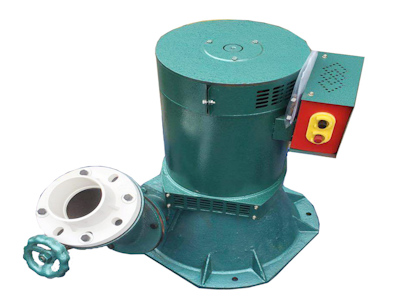
Водяные турбины являются сердцем гидроэнергетических систем, преобразуя кинетическую энергию воды в электрическую. Однако, несмотря на их важность, они часто подвержены вибрации, которая может привести к серьезным проблемам, включая снижение эффективности, повышенный износ и даже катастрофические отказы. В этой статье мы глубоко исследуем феномен вибрации водяных турбин, объясняя, как и почему это происходит, а также предлагая стратегии для минимизации негативных последствий.
Введение в вибрацию водяных турбин
Вибрация — это механическое колебание, которое возникает в результате динамических сил, действующих на турбину. В контексте водяных турбин вибрация может быть вызвана различными факторами, такими как гидродинамические силы, механические дисбалансы, резонансные явления и внешние воздействия. Понимание этих причин имеет решающее значение для обеспечения надежности и долговечности гидроэнергетических установок.
Гидроэнергетика играет ключевую роль в мировой энергетике, обеспечивая возобновляемую и экологически чистую энергию. Однако вибрация турбин может значительно снизить КПД системы и увеличить затраты на техническое обслуживание. В некоторых случаях чрезмерная вибрация может привести к авариям, как это произошло на Саяно-Шушенской ГЭС в 2009 году, где вибрация стала одной из причин разрушения турбины.
Основные причины вибрации водяных турбин
Гидродинамические причины
Гидродинамические силы являются одной из основных причин вибрации. Они возникают из-за нестационарного течения воды через турбину. Например, кавитация — образование и схлопывание пузырьков пара — может создавать интенсивные ударные нагрузки, приводящие к вибрации. Кавитация часто происходит при высоких скоростях потока или неправильной геометрии лопастей.
Другой гидродинамический фактор — это неравномерность потока воды. Если вода поступает в турбину с переменной скоростью или под углом, это может вызвать пульсации давления, которые передаются на конструкцию турбины. Такие явления особенно常见 в системах с изменяемой нагрузкой или в условиях частичной нагрузки.
Кроме того, взаимодействие между лопастями и статором может приводить к возникновению вихрей и турбулентности, которые усиливают вибрацию. Это часто наблюдается в радиально-осевых турбинах, где сложная геометрия потока способствует динамическим неустойчивостям.
Механические причины
Механические дисбалансы — еще одна распространенная причина вибрации. Если ротор турбины не сбалансирован правильно, это создает центробежные силы, вызывающие колебания. Дисбаланс может быть результатом manufacturing defects, износа или коррозии компонентов.
Несоосность валов также contributes significantly to vibration. When the turbine shaft is not aligned with the generator shaft, it creates bending moments and torsional vibrations. This misalignment can be due to installation errors, thermal expansion, or foundation settling.
Износ подшипников и других движущихся parts can lead to increased clearance and play, which amplifies vibration. Regular maintenance is essential to detect and address such issues early.
Резонансные явления
Резонанс occurs when the natural frequency of the turbine structure matches the frequency of external forces, leading to amplified vibrations. This can be particularly dangerous as it can cause rapid fatigue and failure. Natural frequencies depend on the material, geometry, and support conditions of the turbine.
To avoid resonance, engineers perform modal analysis during design to identify critical frequencies and adjust the structure accordingly. However, changes in operating conditions, such as water flow variations, can shift these frequencies, making continuous monitoring necessary.
Внешние воздействия
External factors like seismic activity, water hammer effects, or changes in the surrounding environment can induce vibration. For instance, sudden valve closures can cause water hammer, creating pressure waves that travel through the system and excite the turbine.
Additionally, sediment or debris in the water can impact the blades, causing impulsive vibrations. This is common in rivers with high silt content, where abrasive particles accelerate wear and tear.
Механизмы вибрации: как это происходит
Вибрация в водяных турбинах typically manifests as lateral, torsional, or axial vibrations. Lateral vibrations are the most common and are caused by imbalances or misalignments. They occur perpendicular to the shaft axis and can be measured using accelerometers.
Torsional vibrations involve twisting of the shaft due to torque fluctuations. These are often harder to detect but can lead to catastrophic failures if not monitored. Axial vibrations occur along the shaft axis and are usually related to thrust imbalances or hydraulic forces.
The vibration process starts with an excitation force, such as hydraulic unsteadiness. This force is transferred to the turbine structure, causing it to oscillate. The amplitude of vibration depends on the damping characteristics of the system. Low damping allows vibrations to persist and grow, while high damping helps dissipate energy quickly.
In complex systems, multiple vibration modes can interact, leading to coupled vibrations. For example, lateral and torsional vibrations might combine, creating more severe dynamic responses. Computational fluid dynamics (CFD) and finite element analysis (FEA) are used to model these interactions and predict vibration behavior.
Последствия вибрации
Excessive vibration can have severe consequences. It increases mechanical stress on components, leading to fatigue cracks and reduced lifespan. For instance, blades and shafts are particularly vulnerable to fatigue failure under cyclic loading.
Vibration also causes increased wear on bearings, seals, and other moving parts, resulting in higher maintenance costs and unplanned downtime. In extreme cases, it can lead to complete turbine failure, as seen in historical accidents.
Furthermore, vibration affects the efficiency of the turbine. It disrupts the smooth flow of water, reducing the energy conversion efficiency. This translates to lower power output and increased operational costs.
From a safety perspective, vibration can compromise the structural integrity of the entire power plant. It may also generate noise pollution, affecting the surrounding environment and workforce.
Методы снижения вибрации
Проектирование и оптимизация
Proper design is the first line of defense against vibration. Using advanced materials with high fatigue strength and damping properties can reduce vibration amplitudes. For example, composite materials or specially treated steels are often employed.
Optimizing the geometry of blades and waterways minimizes hydraulic instabilities. CFD simulations help in designing shapes that promote laminar flow and reduce turbulence.
Incorporating flexibility into the design, such as using dampers or isolators, can absorb vibrational energy. Tuned mass dampers are sometimes used to counteract specific frequency vibrations.
Техническое обслуживание и мониторинг
Regular maintenance is crucial for preventing vibration-related issues. This includes balancing rotors, aligning shafts, and inspecting for wear. Predictive maintenance techniques, such as vibration analysis and condition monitoring, allow early detection of problems.
Vibration sensors and monitoring systems are installed on turbines to continuously track vibration levels. Data from these systems can be analyzed to identify trends and trigger alarms before failures occur.
Lubrication of bearings and other components reduces friction and wear, thereby minimizing vibration sources. Using high-quality lubricants suited for hydrodynamic conditions is essential.
Операционные стратегии
Adjusting operational parameters can mitigate vibration. For instance, avoiding operating at resonant speeds or under partial load conditions where vibration is pronounced. Variable speed operations might be implemented to skip critical frequencies.
Controlling water flow through better gate or valve management reduces hydraulic excitations. Smooth acceleration and deceleration protocols help minimize transient vibrations.
In some cases, retrofitting older turbines with modern control systems enhances stability. Active vibration control systems, which use actuators to counteract forces in real-time, are becoming more common.
Будущие тенденции и инновации
The future of vibration control in water turbines lies in smart technologies. IoT-enabled sensors and AI algorithms can predict vibration patterns and automate responses. For example, machine learning models can analyze historical data to foresee failures.
Advancements in materials science, such as self-healing composites or nanomaterials, may offer better damping and durability. Research is also focused on developing turbines with adaptive geometries that change shape to optimize flow and reduce vibration.
Integration with renewable energy systems, like pairing hydro with solar or wind, requires turbines to operate more flexibly, increasing the need for robust vibration management strategies.
Заключение
Вибрация водяных турбин — complex phenomenon with multifaceted causes, including hydrodynamic, mechanical, resonant, and external factors. Understanding how and why it occurs is essential for ensuring the reliability and efficiency of hydropower systems. Through careful design, regular maintenance, and innovative technologies, it is possible to mitigate vibration and its adverse effects. As the world moves towards sustainable energy, addressing such challenges will be crucial for the future of hydroelectric power.
Proactive measures, such as continuous monitoring and adaptive operations, can significantly reduce risks. Collaboration between engineers, researchers, and operators will drive improvements, making water turbines more resilient and efficient. Ultimately, mastering vibration control not only enhances performance but also contributes to safer and more sustainable energy production.
Ссылки и дополнительные ресурсы
- International Journal of Hydroelectric Energy - статьи по вибрации турбин.
- ГОСТы и стандарты по техническому обслуживанию гидротурбин.
- Кейс-стади аварий, связанных с вибрацией, например, Саяно-Шушенская ГЭС.